
Trick-or-Treating for Every child
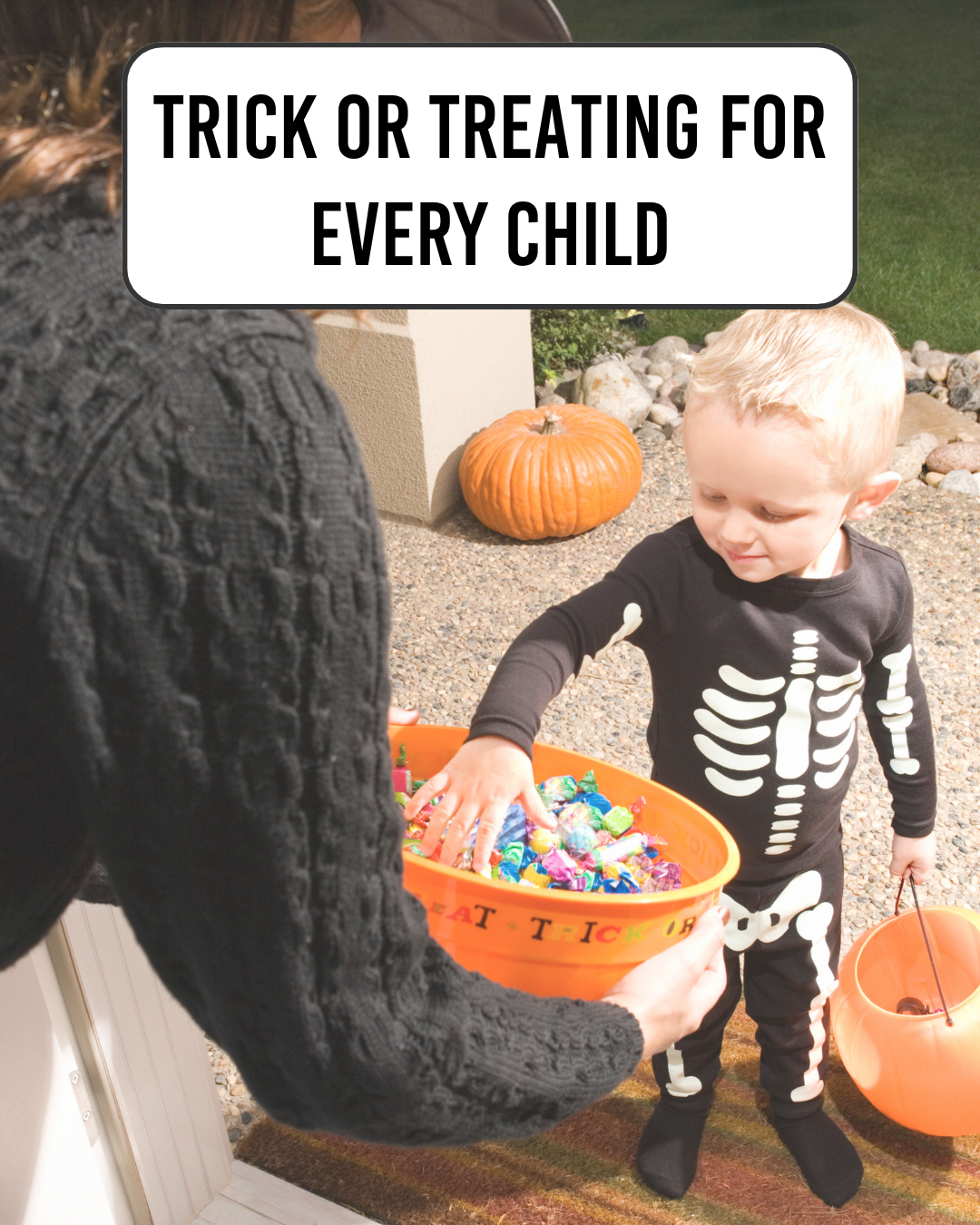
Helping All Little Ghouls Enjoy Halloween
By: Amanda Townsend
As Halloween approaches, it's worth remembering that every child experiences this spooky holiday in their own way. For some kids, trick-or-treating is pure excitement. For others, it can feel overwhelming, anxious, or even scary.
Think about what we're really asking of them. We want kids to dress up in something new, walk around in the dark, approach strangers' doors, and ask for candy. That's a lot to process!
It can also be genuinely confusing. All year long, we teach children not to talk to strangers and never to take candy from someone they don't know. Then one night a year, we ask them to do exactly the opposite. It makes sense that some kids need extra time, support, and understanding to make sense of it all.
Helping Your Child Prepare
A little preparation goes a long way. Here are a few ways to set your child up for a fun, low-stress night.
Review the day ahead of time. Walk the route you plan to take, maybe even during daylight. Talk through the steps of trick-or-treating: walk up, knock or ring, say or show "trick or treat," take a treat, say thank you, and move on. Chat about what they might see, like decorations, costumes, and lots of other families. Check the weather, think about how dark it will be, and decide how far you'll realistically walk. And bring a wagon for good measure! Little legs (and big candy bags) get tired.
Think through the costume. Costumes come with their own challenges. Some are too warm, others not warm enough. Fabric can be itchy or tight, and masks can make it hard to see and breathe. Try the costume on a few times before the big night, and be ready to ditch a layer or bring extras. There's no rule that says a costume has to be worn the whole time.
Plan for big feelings. Spooky houses, large crowds, and lots of strangers can be a lot. Some kids will have a hard time with the "performance" of getting their sweet treat. Have an exit strategy ready, and consider a code word your child can use when they need a break, a hug, or to head home. Skipping a house (or the whole block) is always okay.
Support communication in whatever way works. Not every child is able to say the words "trick or treat," and that's completely okay. Communication comes in many forms! Families we work with have used:
An AAC device (this is something we can practice together in session!)
A "trick or treat" picture glued to a popsicle stick to hold up at the door
Gestures, like holding out their bag or waving
Whatever feels good for your child is the right way to trick-or-treat.
A Note for Everyone Handing Out Candy
If you're answering the door this Halloween, please keep in mind that some of the children who visit may have special needs, including ones you can't see. A few small choices can make a big difference:
Don't require a child to say "trick or treat." A held-out bag, a picture card, a device, or a quiet smile is enough.
Don't judge a costume harshly, or at all. Some kids can't tolerate a costume. Some wear the same one every year because it feels safe. Some are simply wearing what worked today.
Be patient. A child might hesitate, take a long time to choose, or need a parent to help. That's okay.
It also helps to think about the night from a sensory perspective. It may be dark and cold. A costume might be itchy or uncomfortable, and a mask can make it hard to breathe. There's lots of walking, bags get heavy, bigger kids run through the streets, and crowds of families are everywhere. Add in chaos and scary decorations around every corner, and it's hard to know what feels good!
So this Halloween, we're asking our community to be aware, be mindful, and be accepting of all types of trick-or-treaters. Every child deserves to enjoy the magic of the night in their own way.
Happy Halloween from all of us at Simply Spoken!
Have questions about our approach or whether speech therapy might be a good fit for your child? We'd love to talk. Reach out at simplyspokentherapy.com or give us a call at (262) 764-4075.